

How to Rank in Google AI Overviews and AI Mode: The Complete 2027 Playbook

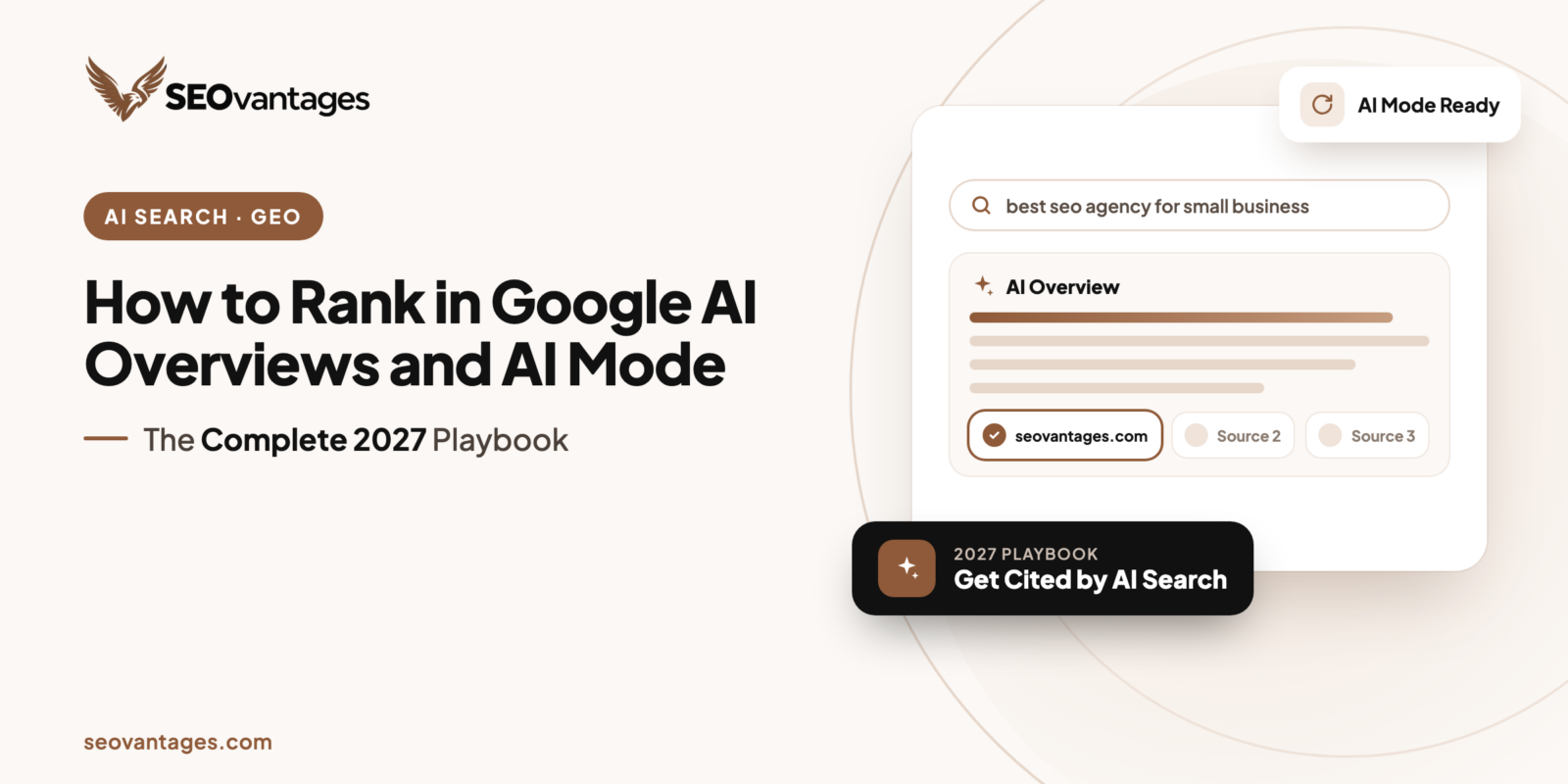
Search visibility has shifted dramatically since Google integrated generative intelligence directly into search results. Studies from search marketing analysts indicate that informational queries now trigger generative summaries in a substantial share of desktop and mobile search results, altering how users interact with organic links. Because these summaries extract direct answers from multiple web pages, traditional ranking metrics no longer guarantee referral traffic. Brands must adapt their visibility strategies to align with how answer engines synthesize data. Understanding how to rank in ai overviews requires a shift from traditional keyword targeting to structural clarity, entity authority, and contextual relevance.
How AI Overviews Choose Sources
Google generative features assemble answers by pulling content from sources that demonstrate high topical authority, clear semantic structure, and direct answers to user queries. Rather than evaluating pages through simple keyword matching, the underlying algorithms analyze the entire context of a webpage to determine which publishers offer the most comprehensive and trustworthy response.
Meta Boxes
Use up and down arrow keys to resize the meta box pane.
Content selection depends on several core technical and informational factors:
- Direct Query Alignment: Pages that answer the user intent within the first few paragraphs are favored for extraction.
- Information Density: Content rich in distinct facts, statistics, and verifiable explanations performs better than generalized introductions.
- Semantic Proximity: Text that surrounds specific entities with related terminology helps search algorithms understand context quickly.
Content Formats AI Cites Most
Generative search features do not cite every format equally. Research into source attribution patterns shows that algorithms heavily favor structured content that can be parsed, summarized, and verified with minimal friction.
To maximize your chances of citation, structure your content using specific formats:
- Concise definitions placed immediately beneath clear heading tags.
- Bulleted lists that outline steps, criteria, or key takeaways.
- Comparative tables that contrast specifications, options, or data points.
- Statistical breakdowns accompanied by clear contextual attribution.
Entity and Schema Optimization
Search engines rely on structured data and entity graphs to understand relationships between people, organizations, concepts, and products. When you implement robust schema markup, you remove ambiguity and help machine learning models connect your brand to specific industry topics.
Implementing effective entity optimization involves practical technical steps:
- Organization Schema: Define your brand entity clearly with verified sameAs links to official profiles and industry registries.
- Article and Author Schema: Connect content pieces directly to verified human authors with established credentials.
- FAQ and HowTo Schema: Provide machine-readable structures for common questions and procedural guides.
- Internal Entity Linking: Link related concepts within your content to reinforce your site’s topical authority graph.
E-E-A-T Signals for AI
Experience, Expertise, Authoritativeness, and Trustworthiness form the backbone of modern search evaluation. Generative systems lean heavily on these signals to decide whether a source is safe and reliable enough to present to users as factual truth.
Organizations must demonstrate authority through verifiable offline and online actions:
- Author Credentials: Display detailed author bios with real-world credentials, professional certifications, and publication history.
- Primary Source Citations: Reference original research, official reports, and verified primary data rather than summarizing third-party blog posts.
- Transparent Publishing Practices: Maintain clear editorial guidelines, correction policies, and accessible contact information.
Measuring AI Visibility
Traditional rank tracking tools that monitor only blue link positions are insufficient for modern search evaluation. Because generative summaries often push organic links below the fold, visibility requires tracking brand citations, referral patterns, and impression shares within generative search result pages.
Effective measurement practices include:
- Log File Analysis: Monitor crawler behavior to see how frequently Googlebot accesses updated structured data and core articles.
- Brand Mention Tracking: Use specialized visibility tools to track when your domain is cited inside generative summaries.
- Referral Traffic Segmentation: Monitor shifts in organic traffic from informational queries to identify which topics drive direct engagement.
Step-by-Step GEO Checklist
Optimizing for generative engines requires a systematic approach to content creation, technical setup, and brand authority.
Follow this sequential checklist to improve your search visibility:
- Audit existing content to identify pages currently ranking near the top of traditional search results for target informational queries.
- Restructure content to place direct, concise answers at the beginning of each major section.
- Integrate comprehensive FAQ sections that address specific user sub-queries.
- Implement rigorous schema markup across all informational and commercial templates.
- Strengthen author profiles and add clear citations for all factual assertions.
- Monitor generative visibility metrics monthly to refine underperforming pages.
Case Study
A B2B enterprise software provider experienced a drop in organic referral traffic after generative summaries began dominating their core informational keywords. To counter this, the marketing team restructured their top-performing resource guides by adding explicit definition blocks, bulleted comparison lists, and comprehensive JSON-LD schema markup. They also updated author bylines to feature verified industry experts and linked directly to primary regulatory reports. Within four months of implementing these generative engine optimization practices, the company regained visibility by securing citations within the generative summary box for 34 percent of their targeted primary keywords, leading to a measurable increase in qualified inbound leads.
Frequently Asked Questions
Can you optimize for Google AI Overviews?
Yes, you can optimize for Google AI Overviews by structuring content to provide clear, direct answers, implementing robust schema markup, and building strong E-E-A-T signals that establish topical authority.
Does schema help with AI Overviews?
Schema markup helps search engines understand the relationships between entities, authors, and content types, making it easier for generative systems to parse and cite your pages.
Do AI Overviews reduce website traffic?
AI Overviews can reduce click-through rates for broad informational queries because users find answers directly on the search page, though sites cited as authoritative sources often capture higher-intent referral traffic.
How do I track AI Overview citations?
You can track citations by using specialized search visibility platforms that monitor generative search results, analyzing log files for crawl patterns, and monitoring segmented organic referral traffic.